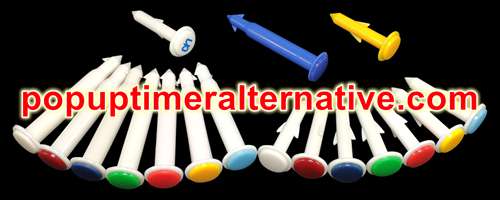
Why Food Manufacturers Are Rethinking Disposable Pop-Up Timer Procurement
Why Food Manufacturers Are Rethinking Disposable Pop-Up Timer Procurement
For many years, disposable pop-up timers were treated as a low-value accessory. Purchasing departments often focused on finding the lowest unit price while assuming every supplier offered essentially the same product. That assumption is gradually disappearing.
Across poultry processors, meat packing plants, frozen meal manufacturers, supermarket private-label programs, and central kitchens, procurement teams have become more cautious about sourcing decisions. Product consistency, food safety compliance, manufacturing capability, and long-term supply reliability now influence purchasing decisions as much as price.
The reason is straightforward. A disposable pop-up timer may represent only a tiny percentage of a finished food product's total cost, but its performance directly affects customer satisfaction, production efficiency, and brand reputation. One unreliable component can generate warranty claims, customer complaints, unnecessary inspections, or expensive product recalls.
As a result, experienced buyers increasingly evaluate disposable pop-up timer suppliers with the same level of scrutiny applied to other critical food-contact components.
The Industry Has Become More Quality-Oriented Than Price-Oriented
Several years ago, many procurement projects began with a simple objective: obtain the lowest quotation from multiple trading companies.
Today's sourcing environment is noticeably different.
Food manufacturers operate under tighter quality management systems, stricter retailer audits, and growing consumer expectations regarding food safety. These changes have elevated even relatively inexpensive components into products requiring technical evaluation rather than simple price comparison.
Professional buyers now ask questions that were rarely discussed in the past:
- How stable is the activation temperature between production batches?
- Does the supplier manufacture the product or simply resell it?
- What materials contact food during cooking?
- Can production capacity support seasonal demand spikes?
- How consistent is quality after years of continuous production?
- Which certifications support export requirements?
These questions reflect a broader shift from transactional purchasing toward long-term supply chain management.
Factory Capability Has Become a Competitive Advantage
One noticeable trend in global procurement is the preference for direct-source manufacturers instead of multi-layer trading channels.
While trading companies can simplify communication during small purchasing projects, large-volume food manufacturers increasingly prefer suppliers that own production facilities, control manufacturing processes, and maintain complete quality documentation.
Working directly with a specialized factory often provides several practical advantages:
- Shorter communication chains between engineering teams.
- Better control over production schedules.
- Consistent manufacturing standards.
- Improved traceability for every production batch.
- Greater flexibility for OEM development.
- Lower overall procurement costs by eliminating intermediary markups.
For procurement departments managing annual purchasing programs, these advantages frequently outweigh marginal differences in unit pricing.
Consistency Is More Valuable Than Occasional Low Pricing
Experienced buyers understand that manufacturing consistency creates measurable financial value.
A disposable pop-up timer must activate within a predictable temperature range every time. If activation temperatures vary from batch to batch, downstream production becomes more complicated. Operators spend additional time inspecting finished products, quality teams perform more verification checks, and customer confidence gradually declines.
Consistency depends on numerous manufacturing variables, including material selection, wax formulation, spring precision, molding accuracy, assembly control, and final inspection procedures.
Suppliers that focus exclusively on this product category generally accumulate process knowledge that cannot be easily replicated by manufacturers producing hundreds of unrelated products.
Material Selection Directly Influences Product Reliability
Although disposable pop-up timers appear mechanically simple, every internal component contributes to overall performance.
Professional buyers increasingly request detailed information regarding raw materials instead of accepting generic product descriptions.
High-quality disposable pop-up timers typically incorporate:
- Food-grade PA66 nylon for structural stability.
- BPA-free food-contact materials.
- Food-grade thermal wax formulated without heavy metals or soft metals.
- High-precision metal springs designed for stable mechanical performance.
- Injection-molded components manufactured within controlled dimensional tolerances.
These material choices help improve activation consistency while supporting compliance with international food-contact regulations.
Compliance Documentation Is Becoming a Purchasing Requirement
Food manufacturers serving multiple export markets increasingly require documentation before approving new suppliers.
Rather than requesting certificates only after production begins, procurement teams now integrate compliance verification into supplier qualification.
Frequently requested documentation includes:
- FDA compliance.
- EU food-contact compliance.
- BRC-related manufacturing systems.
- Material declarations.
- Product specifications.
- Quality inspection reports.
Complete documentation shortens supplier approval cycles and reduces delays during customer audits.
OEM Buyers Need More Than Standard Products
Many international customers no longer purchase completely standard disposable pop-up timers.
Instead, they require customized solutions that integrate with their packaging design, cooking process, branding strategy, or private-label product line.
Examples include:
- Different activation temperatures for poultry, beef, or specialty products.
- Custom housing colors.
- Private-label packaging.
- Retail-ready blister packs.
- Bulk industrial packaging.
- Customized logos.
A specialized manufacturing partner with extensive production experience is generally better positioned to support these projects than companies relying entirely on outsourced manufacturing.
Long-Term Supply Stability Matters More Than Ever
Global food production depends on predictable supply chains.
Manufacturers cannot afford production interruptions caused by inconsistent component availability. Even a short delay can disrupt processing schedules, packaging operations, retailer delivery commitments, and inventory planning.
For this reason, procurement departments increasingly evaluate supplier stability using criteria such as manufacturing history, export experience, production capacity, quality management, and specialization.
Suppliers that have remained focused on one product category for many years often demonstrate stronger process control and more predictable production planning than companies with constantly changing product portfolios.
What Professional Buyers Evaluate Before Selecting a Supplier
Instead of comparing quotations alone, experienced procurement teams often assess suppliers using a broader framework.
| Evaluation Area | Key Considerations |
|---|---|
| Manufacturing Experience | Years specializing in disposable pop-up timers rather than general plastic products. |
| Production Capability | Stable capacity for large export orders throughout the year. |
| Quality Control | Batch consistency, inspection procedures, and documented quality systems. |
| Material Safety | Food-grade components, BPA-free materials, compliant thermal wax, and precision springs. |
| Certifications | FDA, EU, and BRC-related compliance documentation. |
| OEM Support | Customization capability for activation temperature, branding, and packaging. |
| Supply Reliability | Long-term export experience and dependable production scheduling. |
Looking Beyond Today's Purchase Order
The most successful procurement strategies rarely focus on the next shipment alone.
Instead, they consider the total cost of ownership across years of cooperation. Stable quality reduces inspection costs. Reliable deliveries improve production planning. Consistent product performance strengthens customer confidence. Experienced technical support minimizes project delays during product development.
When evaluated over the lifetime of a supply relationship, selecting an experienced manufacturing partner often generates significantly greater value than choosing the lowest initial quotation.
This perspective explains why many international food manufacturers are rethinking how they source disposable pop-up timers. Procurement has evolved from buying a small plastic component into selecting a dependable manufacturing partner capable of supporting food safety, operational efficiency, and long-term business growth.